Quick answer: US citizens do not need a visa for Morocco for tourist stays of up to 90 days. Bring a passport valid for at least 6 months beyond your arrival date with a blank page for the entry stamp. Most Americans fly into Casablanca — Royal Air Maroc flies nonstop from New York JFK in about 7 hours — and then continue to Marrakech, Fes or the Sahara.
US passport holders can enter Morocco visa-free for stays of up to 90 days, which makes it one of the most accessible long-haul destinations for American travelers — the real planning work is choosing a sensible flight routing and knowing a few cultural and money basics before you land, since Morocco runs on cash-friendly dirham rather than dollars.
Americans do not need to apply for a visa in advance for tourist stays of up to 90 days; you simply need a passport valid for at least six months beyond your arrival date and, in some cases, proof of onward travel. Requirements can shift, so it's worth a final check against Morocco's official tourism authority shortly before you fly, and reading our broader Morocco visa guide by country if you're traveling with family members who hold different passports.
Most US cities have no nonstop flights to Morocco — Royal Air Maroc's New York JFK to Casablanca route is the main nonstop option, so most Americans connect through a European hub — Paris, Madrid, Lisbon or London are common — or occasionally through a Gulf hub like Doha or Dubai. Total travel time including a layover typically runs 11 to 16 hours depending on your departure city. Casablanca's Mohammed V Airport is the main international gateway; flying into Marrakech directly (via a connection) is worth considering if your trip is centered there, since it skips an extra domestic-style transfer.
US dollars are not used for purchases and are not always easy to exchange directly; withdraw Moroccan dirham from ATMs after arrival for the best rates, and carry small bills for tips and market stalls. Tipping is customary but modest by American standards — a few dirham for porters, 10-15 dirham for a casual meal, and slightly more for a driver or guide on a full-day tour. Our money in Morocco guide breaks down typical amounts by service.
Given the flight time and time difference, most Americans get the best value from a private, well-paced itinerary rather than trying to see the whole country in one long day-tripping marathon. A one-day Marrakech city tour is a good way to ease into the medina's pace before heading further afield. For more general planning context before you book, Morocco's official tourism portal is a reliable source for current entry rules.
| Item | Price in MAD | Approx. in USD |
|---|---|---|
| Mint tea in a café | 10–20 | $1–2 |
| Tagine in a local restaurant | 50–90 | $5–9 |
| City taxi ride | 15–40 | $2–4 |
| Mid-range riad, double room | 800–1,500 | $80–150 |
| Private day trip from Marrakech (our tours) | — | from about $27 (€25) |
| 3-day private Sahara tour (our tours) | — | from about $250 (€230) |
Cards are accepted in hotels, larger restaurants and malls, but Morocco is still a cash country: withdraw dirhams from bank ATMs on arrival (Casablanca and Marrakech airports have several) and keep small notes for taxis, tips and souks. Dirhams are a closed currency, so you cannot buy them in the US before you travel; keep your ATM or exchange receipts if you want to change leftover dirhams back.
Morocco is one of the most visited countries in Africa and is generally safe for American travelers. The main issues are petty theft in crowded medinas and persistent touts, not violent crime. Use a licensed guide in the big medinas, keep your phone and wallet zipped away in crowds, and agree taxi fares in advance. Check the US State Department's current travel advisory for Morocco before you go. For a deeper look, read our guide Is Morocco safe for tourists?
Ask a local expert on WhatsApp
A well-timed private tour removes the guesswork around jet lag, pacing and logistics that first-time American visitors often worry about most.
Book our Marrakech in a Day private cultural city tour as an easy, well-guided introduction to the country.
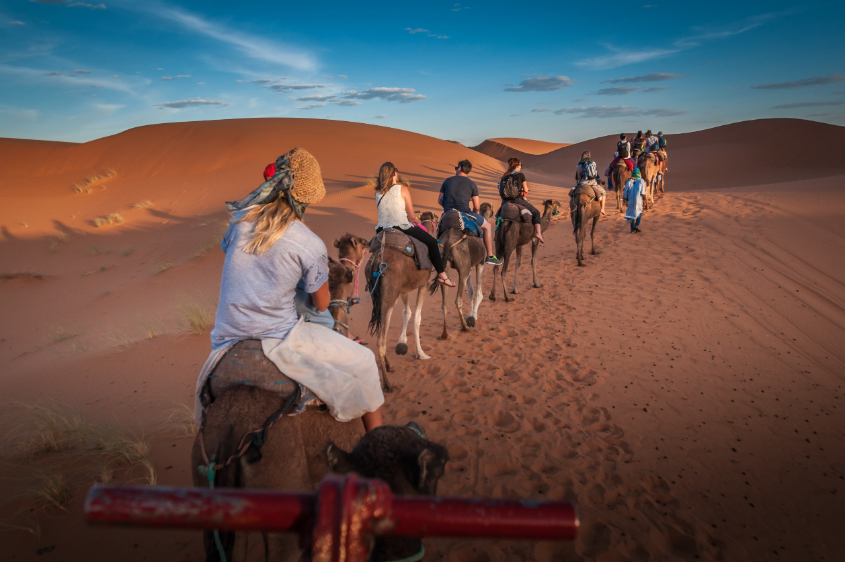 3-Day Private Luxury Sahara Tour: Marrakech to Merzouga Desert via Dades Valley
 10-Day Private Morocco Tour: Marrakech, Sahara Desert, Chefchaouen, Fes & Casablanca - Luxury, Culture & Adventure
 Agafay Desert Day: Quad, Camel Ride & Dinner Show
Tell us what you have in mind and we'll build a private itinerary around it.
Get a Free Quote