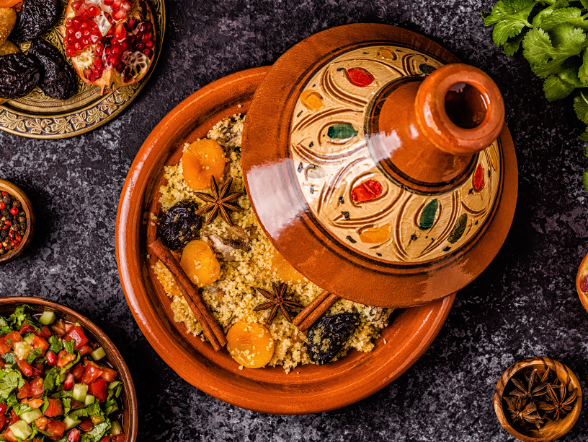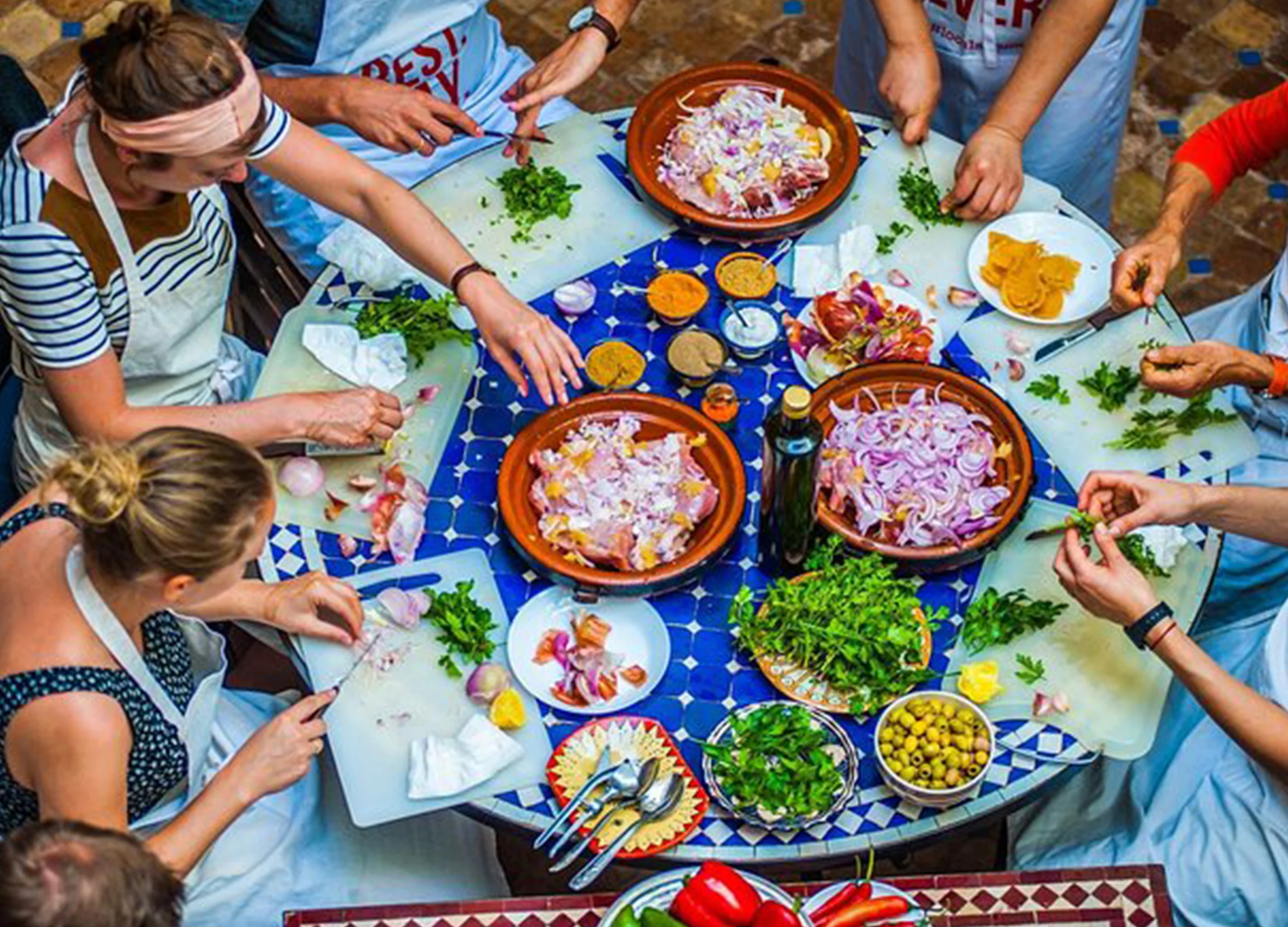
A cooking class in Marrakech usually starts with a walk through the souk to buy spices and vegetables, then three to four hours in a kitchen learning to make a tagine, Moroccan salads and mint tea, and ends with lunch of everything you cooked. Our private class costs from €65 per person with hotel pickup, ingredients, a local chef, lunch and a recipe card. It is a perfect half-day for food lovers, families and anyone who wants to bring a taste of Morocco home.
Menus vary with the season and the teacher, but a typical class includes:
Vegetarian and vegan menus are easy to arrange; tell us when you book. If you want to learn more about the national dish first, read our guide to the Moroccan tagine.
Book it on our Moroccan cooking class in Marrakech page.

| Type | Setting | Best for |
|---|---|---|
| Riad class | A courtyard kitchen in the medina | Travellers staying in the old city |
| Countryside class | A farm or garden outside the city, often with a bread oven | Families and people who want space and calm |
| Private class | Only your group, menu adapted to you | Couples, families, special diets |
| Group class | Shared with other travellers | Solo travellers on a budget |
Most travellers want to recreate their tagine at home. The easiest things to carry are dry spices: cumin, sweet paprika, ground ginger, turmeric, cinnamon and a ras el hanout blend. Buy saffron only from a trusted shop, as cheap "saffron" is often coloured flower petals. Preserved lemons and argan oil travel well in sealed jars, and a small clay tagine can go in checked luggage if it is well wrapped. Ask your chef which spice merchants they use; the souk visit at the start of the class is the perfect moment.
At a Moroccan table, food is often shared from one central dish. People traditionally eat with the right hand, using bread to pick up the food, and take from the part of the dish in front of them. Wash your hands before the meal, and accept the mint tea that follows: it is a sign of welcome. Do not worry about getting it perfect; your hosts will be happy to show you.
Moroccan cooking mixes Amazigh (Berber), Arab, Andalusian and Mediterranean influences. Couscous is traditionally eaten on Fridays with family, and in 2020 the knowledge and practices around couscous were added to UNESCO's intangible heritage list, a joint nomination by Morocco, Algeria, Tunisia and Mauritania. Learn more in our Moroccan food guide and our article on the mint tea tradition.
A cooking class takes a morning or an afternoon, so it pairs well with something else on the same day. Try a pottery class for another hands-on craft, or end the day with a dinner show in the Agafay desert. Real food lovers can go further with our 7-day food tour with the Sahara.